A domain registry is not simply a database of names. It is the operational authority behind a namespace, responsible for maintaining accurate domain records, enforcing policy, enabling registrar transactions, and keeping a trusted digital identifier available when users need it. For ccTLD, gTLD, and branded namespace operators, the quality of registry infrastructure directly affects revenue, reputation, regulatory standing, and confidence in the extension.
That reality changes the technology conversation. A registry platform must do more than process registrations. It must support continuous availability, preserve data integrity, adapt to policy change, and scale without creating risk for registrars or registrants. The right operating model turns the registry from a technical obligation into an engine for sustainable namespace growth.
The Core Role of a Domain Registry
A registry operates the authoritative record for domains within a top-level domain. It determines whether a domain is available, records sponsorship and status information, manages lifecycle events, and publishes the zone data that supports DNS resolution. Registrars interact with the registry on behalf of registrants, while the registry remains accountable for the accuracy, security, and consistent operation of the namespace.
This distinction matters when selecting technology. A registrar platform is designed to sell and manage customer portfolios. A registry system must coordinate an entire channel of accredited registrars, apply uniform policy, support contractual obligations, and maintain a single source of truth across potentially millions of names.
For a growing TLD, even seemingly routine operations carry significant consequences. A failed renewal process can affect thousands of domains. An inconsistent redemption policy can trigger disputes. A delayed zone publication can make active websites unreachable. Registry infrastructure must therefore be designed around predictable controls, not improvised workflows.
Registry Infrastructure Starts With Transaction Integrity
The registry database is the heart of the operation, but it cannot stand alone. Reliable registry services depend on a connected set of specialized capabilities: provisioning interfaces, billing controls, DNS services, reporting, compliance functions, security monitoring, and support processes.
At the transaction layer, Extensible Provisioning Protocol (EPP) provides a standardized method for registrars to create, renew, transfer, update, and delete domain objects. A well-engineered EPP service needs more than protocol compliance. It needs strong authentication, clear error handling, rate management, transaction logging, and predictable behavior under load. Registrars build automation around these interfaces. Inconsistency creates operational cost across the channel.
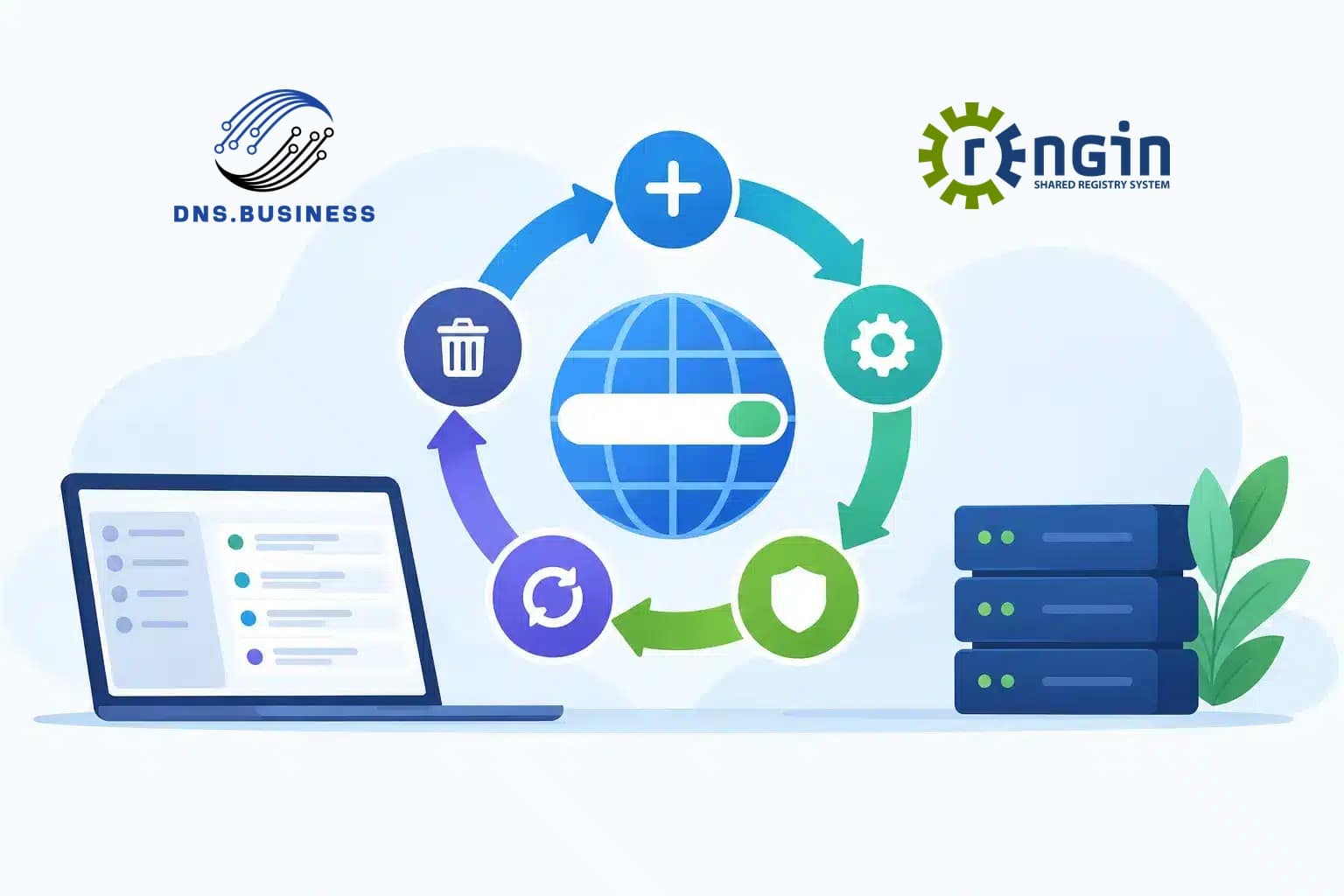
Registry operators also need accurate lifecycle management. Registration, auto-renewal, grace periods, redemption, pending delete, and restoration rules should be configured in line with the TLD’s policy framework and communicated clearly to registrars. Flexibility is valuable, particularly for new gTLDs and specialized namespaces, but flexibility without governance can create exceptions that are difficult to administer at scale.
A mature platform supports configurable policies while preserving an auditable record of every material action. That balance helps operators launch differentiated products without weakening operational discipline.
DNS Is a Registry Responsibility, Not an Afterthought
A domain can be correctly registered yet still fail to resolve if the supporting DNS publication process is weak. Registry operations require dependable zone generation and distribution, resilient authoritative DNS, and safeguards around delegation data. DNSSEC support is equally significant for operators seeking stronger protection against DNS spoofing and data manipulation.
The appropriate architecture depends on the namespace. A country-code registry with national critical-infrastructure expectations may require a different deployment and governance model than a small closed or brand TLD. In both cases, the principle is the same: DNS operations must be engineered for availability, security, and measurable performance.
Security and Compliance Must Be Built Into Operations
Registry operators manage data, credentials, financial flows, and critical Internet infrastructure. Security cannot be an add-on applied after launch. It needs to shape platform design, access controls, incident response, change management, and vendor oversight from the outset.
Role-based access control limits sensitive functions to authorized users. Multi-factor authentication, encrypted communications, secure key management, and detailed audit logs reduce exposure and improve accountability. Segregated environments and controlled deployment processes help prevent a routine configuration change from becoming a production incident.
Compliance requirements vary by registry type and jurisdiction. gTLD operators may need to meet ICANN contractual requirements, including escrow obligations and registry reporting. ccTLD operators may work within local law, government policy, national cybersecurity requirements, or regional data-protection rules. Enterprise namespaces can introduce their own governance standards and brand-protection policies.
There is no universal compliance checklist that fits every operator. The practical requirement is a platform and service partner capable of mapping technical controls to the registry’s actual obligations. That includes producing reliable reports, retaining records appropriately, supporting audit activity, and responding quickly when policy changes.
Scale Means More Than More Domains
A registry may begin with a modest launch volume and later face rapid growth through registrar expansion, promotional campaigns, market adoption, or a new distribution partnership. Capacity planning must account for more than the total number of domains under management. Peak transaction volume, DNS query demand, reporting workloads, billing cycles, and support demand can all rise at different rates.
Scalable registry infrastructure handles those conditions without forcing a disruptive platform replacement. It should support performance monitoring, capacity thresholds, redundancy, backup and recovery procedures, and tested business continuity plans. High availability is not merely a target percentage in a service agreement. It is the ability to continue serving registrars and Internet users when components, networks, or locations fail.
This is where generic software often falls short. General-purpose platforms may store records effectively, yet lack the registry-specific logic needed for lifecycle policy, EPP transactions, registrar accreditation, fee structures, escrow, and domain-industry reporting. Purpose-built technology reduces the need to bolt critical functions onto a system that was never intended to operate a TLD.
Registrar Experience Fuels Namespace Growth
A registry’s commercial reach depends heavily on its registrar channel. Registrars need clear onboarding, stable technical documentation, responsive support, transparent pricing, and tools that minimize operational friction. If integration is difficult or support is slow, even a compelling TLD can struggle to gain distribution.
A strong registry platform supports registrar administration through secure portals, account controls, financial reporting, accreditation workflows, and near-real-time visibility into transactions. Operators should also be able to define fee programs, promotional periods, premium-name rules, and reseller-friendly structures without relying on manual intervention for every exception.
The trade-off is clear. Highly customized commercial rules can create market differentiation, but excessive complexity can confuse registrars and make automation harder. The most effective registry programs use commercial flexibility where it creates genuine value, while keeping core transaction rules understandable and consistent.
Migration Is an Operational Test
Registry migration is one of the highest-risk events in the domain industry. It involves moving authoritative data, registrar connections, billing records, policy configuration, DNS dependencies, and operational accountability, often with limited tolerance for downtime. Success depends on preparation rather than a single cutover weekend.
A credible migration plan begins with data assessment and reconciliation. Operators need to identify incomplete records, unsupported statuses, historical inconsistencies, and dependencies in connected systems. Parallel testing with registrars validates EPP behavior before production. Clear communications, defined rollback procedures, and post-migration monitoring reduce uncertainty for every stakeholder.
Experience matters because every namespace has exceptions. Legacy data models, registrar-specific practices, local policy requirements, and historical billing arrangements can complicate a transition. A partner with direct registry operations experience can identify these issues early and design a migration path that protects continuity.
Selecting a Long-Term Registry Technology Partner
Registry technology should be evaluated as a long-term operational relationship, not a procurement exercise focused only on launch-day features. Operators should look for demonstrated expertise in registry back-end systems, security and compliance practices, scalability, support responsiveness, and policy configuration.
They should also ask practical questions. Can the provider support a new gTLD application and launch? Can it migrate a live namespace with controlled risk? Can it serve both a small specialist TLD and a portfolio of more than a million domains? Can its team explain how the platform handles escrow, DNSSEC, disaster recovery, registrar integration, and regulatory reporting?
DNS.Business supports registry operators, registrars, and domain ecosystem partners with purpose-built infrastructure and operational services designed for these realities. The value is not simply software deployment. It is the ability to streamline critical registry functions while retaining the flexibility to evolve with the namespace.
A successful registry earns trust one transaction, one resolution, and one policy decision at a time. Building that trust requires technology that remains dependable when growth accelerates, regulations shift, and the market expects uninterrupted service.