A registrar can lose customer confidence long before a domain fails to resolve. Slow provisioning, inaccurate renewal notices, manual compliance checks, and an API that cannot support reseller automation all create operational friction that customers notice. The right registrar software turns these pressure points into controlled, repeatable processes while giving the business room to grow.
For registrar operators, reseller networks, and enterprises managing substantial domain portfolios, the platform is not simply an order-management tool. It is the operational layer connecting customers, domain registries, billing systems, policy obligations, support teams, and external services. Its design directly affects service reliability, cost to serve, and the ability to introduce new products without creating risk. This guide focuses on choosing that platform: what it must do and how to test it before you commit.
What Registrar Software Must Deliver
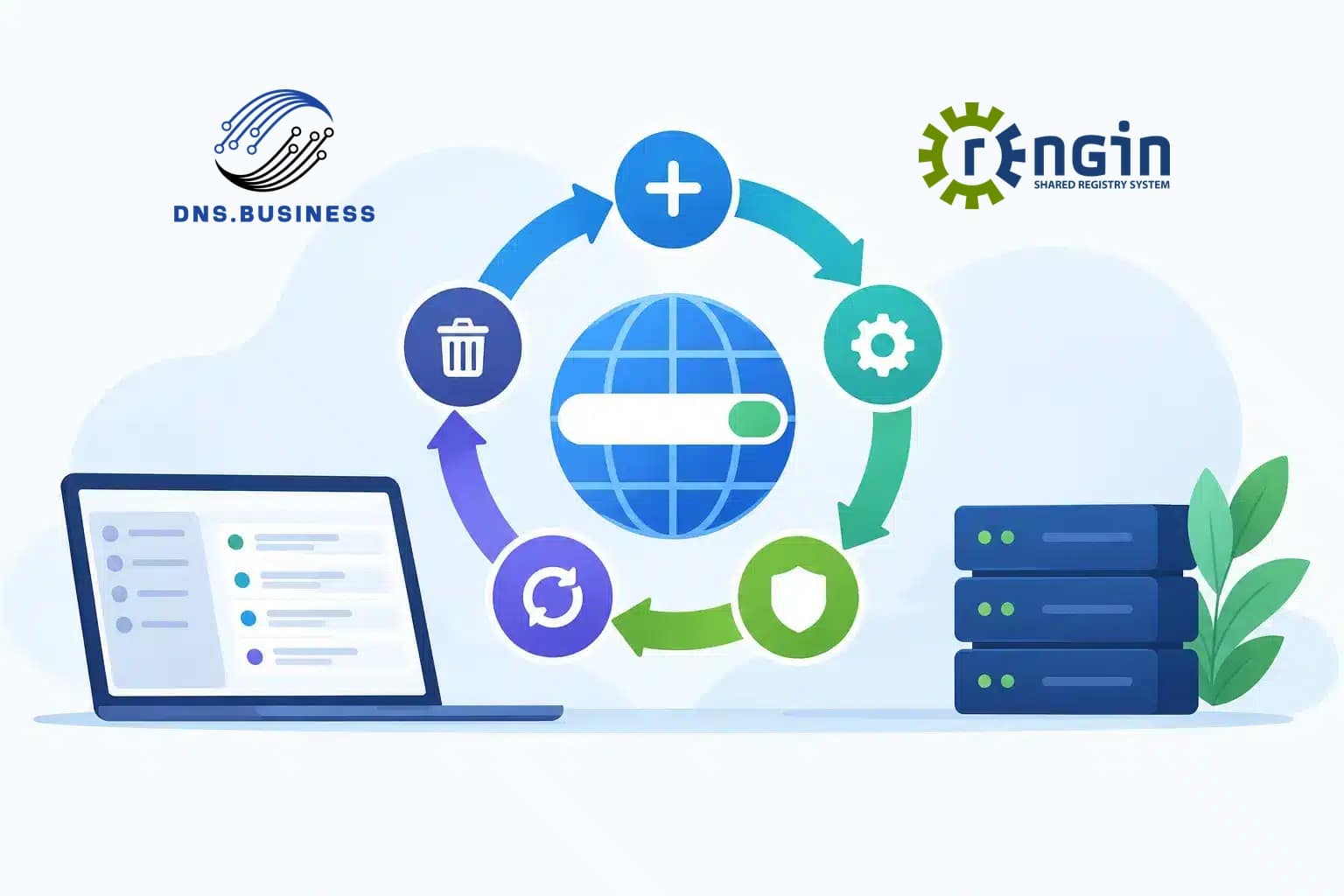
At its core, registrar software manages the full domain lifecycle: availability checks, registration, renewal, transfer, update, deletion, restoration, and expiration handling. However, lifecycle transactions are only part of the requirement. A production-grade platform must apply registry-specific rules correctly, maintain accurate records, support customer communications, and provide administrators with a clear view of operational exceptions.
This matters because no two registry relationships are identical. A registrar may connect to multiple ccTLD and gTLD registries, each with its own command sets, policy rules, fee structures, transfer procedures, and data requirements. Software that treats every extension as interchangeable can force teams into manual workarounds. Those workarounds become expensive as volumes increase and can introduce avoidable compliance exposure.
A purpose-built platform should abstract the complexity where it makes sense while preserving the controls administrators need. For example, a customer-facing portal may present a consistent renewal workflow across extensions, while the back end applies the correct grace periods, redemption rules, and registry commands for each TLD.
The Registry Side of the Equation
Registrar software is only as dependable as the registry systems it connects to. Every registration, renewal, and transfer ends as a transaction against a registry back end, so the quality of that back end shapes what a registrar can promise its customers.
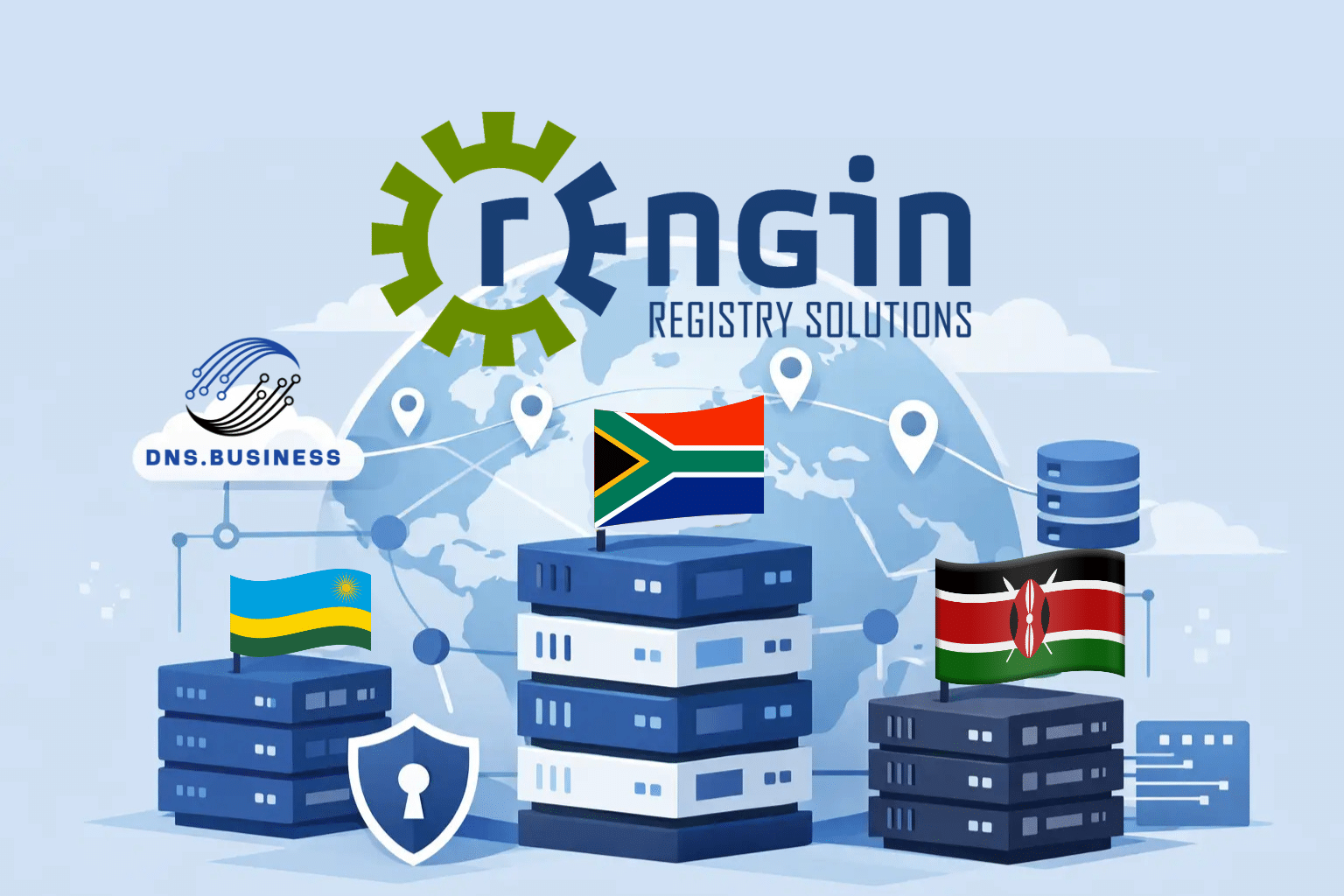
This is where rEngin comes in. rEngin SRS is the core registry engine from DNS.Business and the middle layer of the registry: it brings together EPP, policy and transaction systems, ICANN gTLD and ccTLD compliance, RDDS through Whois and RDAP, and DNS and DNSSEC, running in high-availability production and OT&E environments. Two control panels are built on top of it. rEngin Console is where registry operators manage registrars, domains, and registry functions. rEngin Portal is where registrars and resellers manage their account, onboarding, and domain functions.
For registrars, rEngin Portal is the part you work with day to day. rEngin Portal version 3 is the latest release and is live at ZACR, RyCE, Gateway SRS, and Registry Africa, with ZARC next in line for the upgrade.
Core Capabilities That Separate a Platform From a Portal
A basic portal can accept a registration request. Registrar infrastructure must coordinate the transaction safely from beginning to end. When assessing a platform, decision-makers should look beyond interface design and focus on how the system behaves under real operational conditions.
Registry connectivity and transaction control
Reliable registry connectivity is foundational. The platform needs dependable support for industry-standard protocols such as EPP, together with adaptable connectors for registries that have additional technical or policy requirements. It should handle command queues, response validation, retries, reconciliation, and clear error reporting without allowing duplicate or incomplete transactions to slip through.
Transaction logs should be sufficiently detailed for technical teams to diagnose failures and for operations teams to answer customer questions. When a registration cannot complete because of a registry-side policy response, staff need more than a generic error message. They need actionable context.
The registry side matters here too. On registries running rEngin SRS, EPP and policy enforcement sit in the same core engine, and a separate OT&E environment gives registrars a place to test their integration before they go live in production.
Lifecycle automation
Domains generate recurring operational events. Expirations, auto-renewal windows, redemption periods, transfer locks, contact verification deadlines, and restoration processes should be managed through configurable workflows rather than spreadsheets and individual staff interventions.
Automation reduces missed deadlines, but it must remain configurable. A high-volume retail registrar may use an aggressive auto-renew policy, while an enterprise-focused registrar may require customer approval before renewal. The platform should support both approaches without requiring a custom development project for each change in business policy. For a wider view of where this is heading, see our overview of registry automation trends.
Reseller and API enablement
For businesses serving resellers, API capability is a commercial requirement, not an optional technical feature. Resellers need secure programmatic access to domain search, registration, renewal, nameserver updates, contact management, pricing, and reporting. They also need accurate status data so their customers are not presented with misleading information.
A well-designed API should use strong authentication, granular permissions, clear versioning, and predictable response behavior. Equally important, the platform must distinguish between reseller-level, sub-reseller-level, and end-customer permissions. Weak account segmentation can create both security and support problems. rEngin Portal is designed for both registrars and resellers, giving each a place to handle account, onboarding, and domain functions at the registry.
Billing, pricing, and financial controls
Domain operations involve more than a single retail price. Registrars may manage registry fees, premium domain pricing, promotional rates, reseller tiers, taxes, credits, refunds, and multi-currency accounts. These rules need to be controlled centrally and applied accurately at the point of sale and throughout the lifecycle.
Financial flexibility should not compromise auditability. Teams need to understand why a specific price was applied, who authorized a credit, and whether a reseller has sufficient funds before a registry transaction is sent. The more automated the transaction flow, the more critical these controls become.
Security and Compliance Are Operating Requirements
A domain portfolio is a high-value target. Unauthorized nameserver changes, account takeover, fraudulent transfers, and altered registrant data can have immediate commercial and reputational consequences. Registrar software should therefore be designed around least-privilege access, strong authentication, encrypted data handling, auditable activity logs, and role-based administration.
Security also extends to business continuity. Operators should understand how the platform handles backups, recovery objectives, failover, service monitoring, and incident response. A platform may offer impressive features but still create unacceptable risk if recovery is unclear or dependent on a small number of individuals with undocumented knowledge.
Compliance requirements vary by jurisdiction and registry relationship. Depending on the registrar’s market and TLD portfolio, this can include registrant data handling, identity validation, Whois or RDAP obligations, retention schedules, abuse reporting workflows, and ICANN-related policies. The correct approach is not to hard-code every rule permanently. It is to provide controlled configuration and policy updates that can be implemented without disrupting live operations. At the registry layer, rEngin SRS handles ICANN gTLD and ccTLD compliance and RDDS through Whois and RDAP as part of its core engine.
How to Evaluate Registrar Software Before Migration
The most difficult point in a software decision is often not selection. It is migration. Domain data is interconnected: registrant and contact records, nameserver objects, authorization codes, billing history, status values, reseller relationships, and customer communications all need careful treatment. An incomplete migration can lead to failed renewals, inaccessible domains, or support queues that overwhelm the business.
A serious evaluation should test the vendor’s implementation discipline as closely as its feature set. Ask how domain data is mapped, validated, reconciled, and approved before cutover. Confirm whether the migration process supports staged testing, parallel operations, rollback planning, and post-launch monitoring. The right answer will vary by portfolio size and registry mix, but a vendor should be able to explain the process in operational terms rather than offer general assurances.
Consider these practical questions during procurement:
- Can the platform support current TLDs, planned expansion, and registry-specific policy differences without repeated custom builds?
- How are transaction failures, synchronization gaps, and registry outages detected and resolved?
- Can pricing, lifecycle rules, user permissions, and reseller policies be adjusted by authorized business users?
- What evidence demonstrates security controls, availability practices, and domain-industry operating experience?
- What level of technical support and migration ownership is included after deployment?
- How often is the software updated, and can you see which version you are running?
Feature checklists remain useful, but they should not outweigh operational proof. A platform that has managed large-scale domain volumes and complex registry environments is more likely to anticipate the exceptions that become expensive after launch. If you also manage a large portfolio of your own names, our guide to the best domain portfolio software covers the portfolio side of this decision.
See the software before you decide
Transparency is a useful test of any vendor. rEngin SRS is in continuous development, with regular updates and improvements, and its version numbers are published openly on the login pages, so registrars and operators can always see which release they are using. You can also see both control panels in action: walkthroughs are available for rEngin Portal and rEngin Console, and our rEngin Portal and Console walkthroughs article gives an overview.
Build for the Business Model You Have Next
Registrar requirements change as the business matures. A new entrant may prioritize rapid market entry and a branded storefront. An established registrar may need multi-registry automation, reseller hierarchy, advanced reporting, and integration with existing CRM or finance systems. An enterprise domain program may prioritize delegated administration, policy enforcement, and portfolio governance over retail checkout features.
This is why flexibility matters more than feature volume. Software should let an operator add services, adjust workflows, introduce new TLDs, or expand into reseller distribution without replacing the core platform. At the same time, excessive flexibility can create a poorly governed environment. The strongest systems combine configurable business rules with disciplined controls, testing, and change management. Once the platform is chosen, the operating side of growth, from support to reconciliation, is covered in how to scale registrar operations without adding risk.
DNS.Business approaches registrar technology as critical domain infrastructure rather than generic commerce software. That is why rEngin is built with rEngin SRS as the core engine, rEngin Console for registry operators, and rEngin Portal for registrars and resellers. That distinction matters when the platform must support the lifecycle, compliance, security, and scale expectations of professional domain operations.
The best next step is to map the operating model behind the domain business: transaction volumes, TLD mix, customer types, reseller structure, compliance obligations, and planned expansion. With that map in hand, registrar software can be evaluated as the long-term control plane it needs to be, not merely the portal customers happen to see. To see how rEngin Portal and the rEngin SRS engine behind it support registrars and resellers, visit renginsrs.com.