A registry can have strong policy, a clear commercial model, and market demand, yet still struggle if the operating platform underneath it is not fit for purpose. That is why the question what is registry backend matters far more than it might seem at first glance. In practical terms, the registry backend is the core technical and operational system that runs a top-level domain and supports every critical process behind domain lifecycle management.
For registry operators, new gTLD applicants, and institutional namespace owners, this is not just a software question. It is an infrastructure decision that affects uptime, compliance, registrar service quality, launch readiness, reporting accuracy, and long-term growth.
What is registry backend?
A registry backend is the system, platform, and managed operational layer that enables a domain registry to function. It powers the central database of registered domain names, processes transactions from accredited registrars, manages domain lifecycle events, publishes zone data for DNS resolution, and supports policy enforcement, reporting, and security controls.
In simpler terms, it is the engine room of a TLD. The public may only see the domain extension, while registrars may only interact with registration interfaces, but the backend is where the registry actually operates.
A modern registry backend usually includes software, hosting infrastructure, APIs and protocol support, security controls, monitoring, billing functions, data escrow processes, and the operational expertise needed to keep the namespace stable. Some operators build portions of this themselves, but many rely on a specialist provider because the requirements are highly specific to the domain industry.
What a registry backend actually does
At the center of the backend is the shared registration system, often called the SRS. This is the authoritative registry database that records domain objects, contacts, hosts, statuses, creation dates, renewal dates, and transfer activity. If a registrar registers, updates, renews, or deletes a name, the backend processes that transaction according to policy and protocol rules.
The backend also supports EPP services, which allow registrars to communicate with the registry in a standardized way. That sounds straightforward, but in practice it requires careful handling of provisioning rules, extension support, validation logic, throttling, authentication, and auditability.
Another core function is DNS zone generation and distribution. Once a domain is registered and delegated, the registry backend must ensure that the correct zone data is published accurately and quickly. If that process fails, domains may exist in the database but not resolve as expected on the internet.
Beyond provisioning and DNS, the backend typically handles WHOIS or RDAP services, registrar account management, reporting, billing workflows, escrow preparation, abuse-related controls, and business continuity measures. For regulated or policy-heavy namespaces, it may also support eligibility checks, reserved name lists, premium name handling, sunrise and claims phases, or local compliance rules.
Why the registry backend matters operationally
A registry backend is not just a technical stack. It directly shapes how well a registry can operate under pressure.
If the platform is slow, registrars feel it immediately through delayed transactions and support friction. If it lacks flexibility, policy changes become expensive and time-consuming. If security controls are weak, the registry takes on avoidable risk. If reporting is incomplete, compliance and governance become harder to manage.
This is especially relevant for operators managing public-interest namespaces, country-code domains, and growth-oriented gTLDs. A registry backend has to support current demand while giving the operator room to launch new services, onboard registrars efficiently, and adapt to ICANN or local regulatory requirements.
The better way to think about it is this: the backend is where operational resilience becomes real. It is where business strategy either gets executed cleanly or gets blocked by system limitations.
The main components of a registry backend
Shared registration system
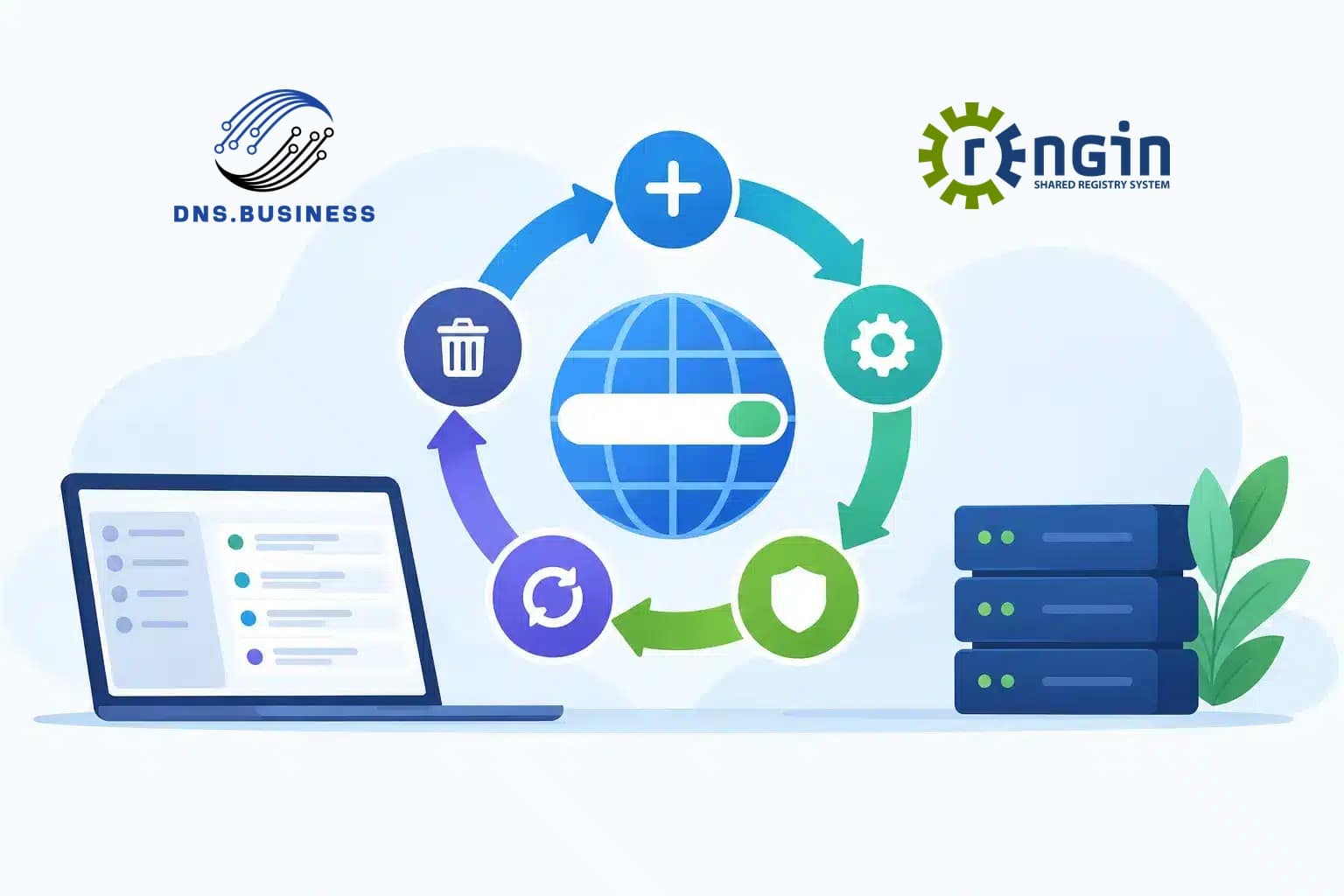
This is the authoritative database and transaction layer for the TLD. It manages domain create, renew, transfer, update, restore, delete, and host operations, along with the statuses and rules attached to each object.
Registrar connectivity
Most registry backends support EPP as the primary provisioning protocol, along with registrar portals, credentials management, session controls, and transaction logging. Strong registrar tooling reduces onboarding friction and improves the quality of the channel relationship.
DNS and zone management
The backend must generate and distribute accurate zone files, manage DNSSEC-related processes where applicable, and integrate cleanly with the authoritative DNS environment. This area is often underestimated, even though it is fundamental to namespace trust and availability.
Data and compliance services
Registries need reporting, audit trails, escrow preparation, RDAP or WHOIS outputs, and controls aligned with policy obligations. For some operators, these capabilities are as important as domain provisioning itself.
Security and continuity
A credible backend includes access controls, redundancy, monitoring, incident response readiness, backups, disaster recovery, and tested continuity procedures. For mission-critical namespaces, these are not optional extras.
Registry backend vs registrar platform
This distinction matters because the terms are sometimes blurred.
A registry backend serves the operator of the top-level domain itself. It manages the authoritative record for all second-level domains under that TLD and provides the interfaces that registrars use to interact with the registry.
A registrar platform, by contrast, is used by the retail or wholesale seller of domain names. It manages customer accounts, storefronts, order flows, reseller functions, and domain portfolios across many TLDs.
The two systems interact closely, but they solve different problems. Confusing them can lead to poor procurement decisions, especially when a registry is evaluating technology that was not built for actual registry operations.
What to look for in a registry backend provider
Not every backend is built to the same standard, and not every registry has the same operational profile. A small ccTLD with local policy requirements may need different capabilities than a high-volume gTLD preparing for global registrar onboarding.
That said, there are consistent areas decision-makers should evaluate.
First is domain-industry specialization. A generic transaction platform may look capable on paper, but registry operations involve protocols, policy workflows, launch phases, escrow obligations, registrar support expectations, and namespace governance requirements that are highly specific.
Second is scalability. The question is not only whether the system can handle a large volume of domains, but whether it can support growth without degrading transaction performance, reporting quality, or operational control.
Third is flexibility. Many registries need custom policy logic, local rule sets, differentiated pricing models, premium name handling, multilingual support, or launch-stage controls. A rigid platform can become a constraint within months.
Fourth is operational credibility. Infrastructure claims are easy to make. Proven delivery across live TLD environments matters more. Decision-makers should assess migration experience, service governance, incident management maturity, and track record under real operating conditions.
When changing the registry backend becomes necessary
Some operators revisit the backend only when a contract is ending. In reality, the need often appears earlier.
Legacy systems can become expensive to maintain, difficult to integrate, or too inflexible for modern registrar expectations. In other cases, the registry may be preparing for a relaunch, a policy shift, a DNSSEC upgrade, a new gTLD application, or a broader digital infrastructure strategy that the current platform cannot support.
Migration is rarely a casual decision. It carries risk, especially where domain continuity, registrar communication, and data integrity are involved. But staying on an unsuitable backend can carry a quieter kind of risk – slow innovation, operational drag, and growing exposure to compliance or security gaps.
That is why migration planning matters as much as platform selection. A strong provider should be able to support not only steady-state operations, but also the transition itself with tested procedures, rollback planning, stakeholder coordination, and data validation discipline.
What is registry backend in strategic terms?
For senior decision-makers, the better question may not be what is registry backend, but what role does it play in the future of the namespace.
The backend determines how quickly a registry can launch, how confidently it can scale, how well it can serve registrars, and how effectively it can meet regulatory and operational obligations. It also affects commercial agility. Promotions, premium programs, policy updates, and partner integrations all depend on what the underlying platform can support.
For that reason, the backend should be treated as a strategic infrastructure asset, not a hidden utility. The right environment helps streamline operations, enhance service quality, and fuel growth across the domain ecosystem. The wrong one tends to surface only when something breaks, slows down, or blocks the next stage of expansion.
Providers such as DNS.Business operate in this space because registry operators need more than software alone. They need infrastructure depth, domain-specific engineering, and long-term operational support aligned with the realities of running a live namespace.
If you are evaluating a registry launch, modernization program, or migration path, start with the operating model underneath it. The strength of a TLD is never only in the label people see – it is in the backend that keeps the entire namespace dependable every day.