A ccTLD is not just another domain extension. It is national digital infrastructure, often tied to public trust, policy oversight, registrar relationships, and long-term service continuity. That is why ccTLD registry software cannot be treated like a generic domain management tool. The platform at the center of a country-code registry has to support policy execution, registrar operations, security controls, billing logic, reporting, and future growth without creating friction for the teams who run it.
For registry operators, the real question is not whether software can process domain transactions. Most platforms can do that. The question is whether the system can support the operational model, compliance posture, and service expectations of a live ccTLD while still leaving room to modernize.
Why ccTLD registry software is a strategic decision
A ccTLD registry sits at the intersection of policy and infrastructure. It has to enforce registration rules consistently, expose stable interfaces to registrars, maintain accurate domain data, and keep services available under pressure. If the underlying platform is rigid, every policy change becomes a development project. If it is poorly integrated, staff end up compensating with manual workarounds. If it was not built for registry environments in the first place, risk shows up where it matters most – uptime, data integrity, and trust.
This is why software selection is rarely just a technical procurement exercise. It affects how quickly a registry can launch new services, how safely it can migrate from legacy systems, and how effectively it can support registrars and registrants over time. For many operators, the strongest business case is not replacing one interface with another. It is reducing operational drag while creating a more controllable and scalable registry environment.
The core capabilities ccTLD registry software needs
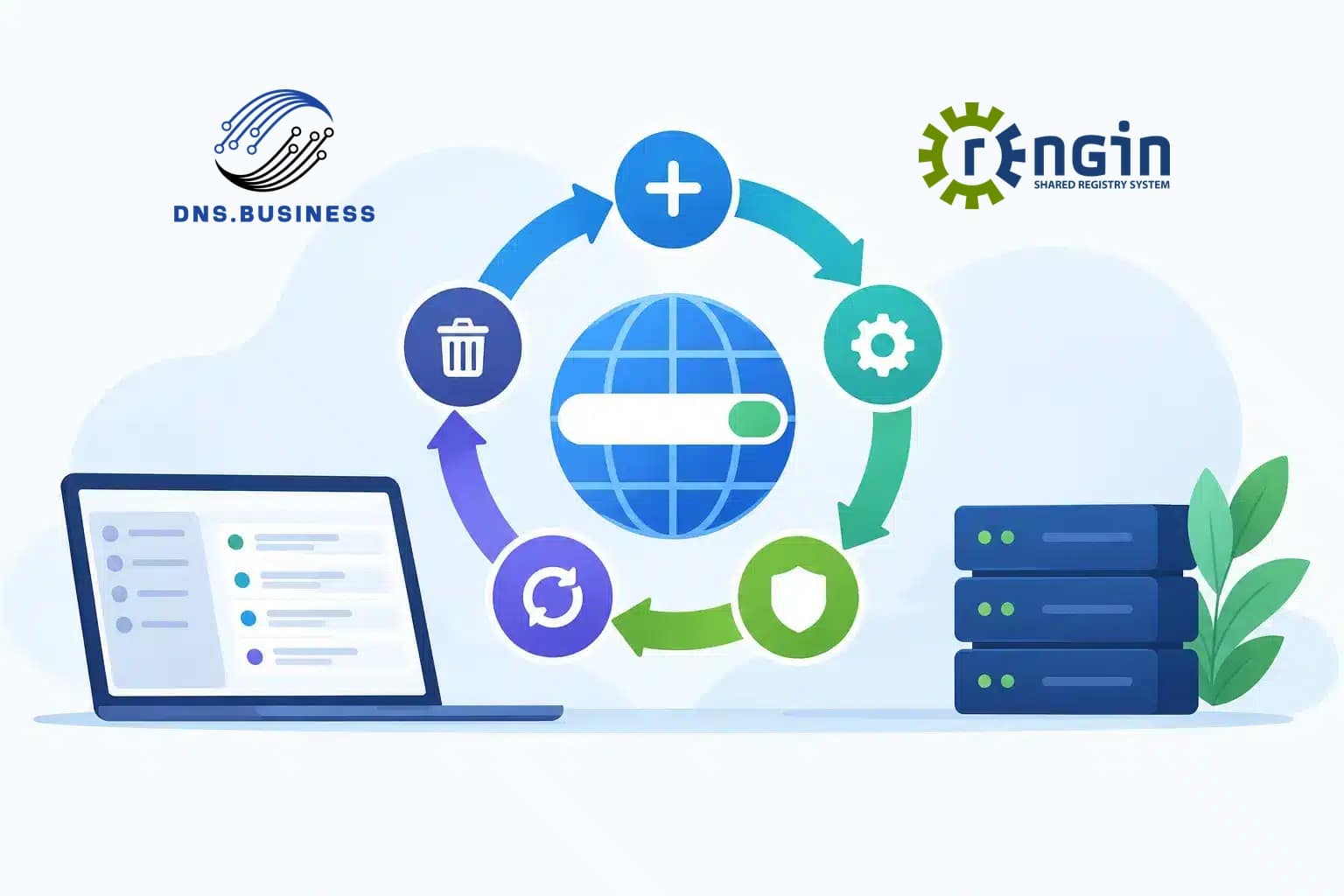
At a minimum, the platform has to manage the full domain lifecycle with accuracy and speed. That includes create, renew, transfer, update, restore, delete, and DNS-related operations through standard registrar interfaces. But capability at the protocol level is only the starting point.
Good ccTLD registry software also needs to reflect the policy reality of country-code operations. Some registries require local presence rules, eligibility checks, reserved names workflows, special approval paths, or differentiated pricing by domain class. Others need support for multi-registrar ecosystems with varying commercial terms, credit controls, and reporting obligations. These are not edge cases. They are everyday operating requirements.
A strong platform should therefore provide configurable policy and business logic rather than force the operator into custom development for each rule change. That distinction matters. Configuration supports agility. Custom code increases dependency, slows change windows, and often raises long-term support costs.
Security and compliance are built into the platform, not added later
Registry operators are responsible for systems that cannot afford casual security thinking. Access control, auditability, role separation, data protection, API governance, and secure operational workflows have to be native features. So do the controls needed to support DNSSEC, registrar authentication, abuse handling processes, and incident response.
Compliance also has a practical side. Teams need accurate logs, traceable changes, structured reporting, and predictable operational records. That may be driven by national regulation, internal governance, ISO-aligned controls, or ICANN-related requirements in mixed portfolio environments. Whatever the source, the software should make compliance easier to manage, not harder to prove.
This is one of the clearest dividing lines between domain-specific registry platforms and generic software products. Generic platforms often cover broad functionality, but registry operators usually need systems designed around exact workflows, service boundaries, and accountability requirements.
Automation matters because manual registry operations do not scale
Many registry teams still carry legacy processes that were workable at lower transaction volumes but become fragile over time. Manual approvals, spreadsheet-based reconciliation, fragmented billing, and disconnected reporting are common signs that the platform is limiting the operation.
Effective ccTLD registry software reduces those pressure points by automating routine workflows while preserving operator control. Registrar onboarding, notifications, invoicing, credit thresholds, lifecycle events, abuse escalation triggers, and policy enforcement can all be streamlined when the software is designed for registry use. The benefit is not only efficiency. It is consistency.
Consistency matters in a registry environment because every exception consumes technical attention, introduces room for error, and increases dependence on specific individuals. Automation creates repeatable service delivery and gives operations teams more time to focus on resilience, service improvement, and strategic growth.
Legacy replacement is often about risk reduction, not feature expansion
A lot of registry modernization projects begin with a practical problem: the existing system is too hard to change. It may rely on aging infrastructure, unsupported components, undocumented customizations, or a shrinking pool of internal knowledge. In some cases, the software still works, but only because experienced staff know how to manage around its limitations.
That setup can survive for years, until a policy update, registrar issue, security requirement, or migration event exposes how narrow the margin has become. Replacing a legacy platform is therefore not always about adding new functions. Often it is about lowering concentration risk and restoring operational flexibility.
The migration path matters as much as the destination. Registry operators need a provider that understands data mapping, registrar coordination, cutover planning, validation, rollback contingencies, and communication management. A technically capable platform with weak migration support can still create unnecessary disruption. This is where experienced registry partners stand apart from software vendors that have not managed live domain transitions.
SaaS, licensed, or managed – the right model depends on the registry
There is no single deployment model that fits every ccTLD. Some operators want a fully managed back-end with defined service levels and a smaller in-house operational footprint. Others require licensed deployment in a controlled environment due to national policy, procurement rules, or internal governance. Some need a hybrid approach that combines software control with external operational support.
The better question is whether the platform and provider can adapt to the registry’s governance model without weakening performance or accountability. A small or emerging registry may prioritize speed, cost control, and operational support. A mature registry with established internal teams may prioritize deeper control, custom policy implementation, and integration with national systems.
What matters is flexibility without fragmentation. The operating model should be clear, supportable, and aligned to long-term objectives, not just short-term deployment convenience.
Choosing a provider for ccTLD registry software
Software capability is only one part of the decision. Registry operators should evaluate the provider’s direct experience in the domain industry, track record with live zones, understanding of registrar ecosystems, and ability to support growth over time. A provider may present a polished platform, but if they cannot demonstrate operational credibility in registry environments, that gap will surface later.
Look closely at how they handle scale, security governance, technical support, migration planning, and service continuity. Ask how policy changes are implemented. Ask what is configurable and what requires development. Ask how they support registrar communications during transitions. Ask what happens when volume grows, when rules change, or when a namespace adds commercial complexity.
This is also where sector-specific credentials matter. Infrastructure providers with real registry operations experience bring a different level of confidence because they understand that domain services are not just software transactions. They are public-facing, policy-bound, always-on systems. At DNS.Business, that perspective shapes how registry technology is built and supported across ccTLD and gTLD environments.
The strongest platforms help a registry grow without losing control
Growth in a ccTLD is not only about more domains under management. It can mean broader registrar participation, better service quality, stronger policy enforcement, more reliable billing, cleaner reporting, and a clearer path to new initiatives. Software should support that expansion without creating a larger administrative burden.
That usually comes down to design discipline. Can the platform adapt to different commercial models? Can it expose useful operational data? Can it reduce dependency on manual intervention? Can it help the registry evolve without recurring structural rework? These are the questions that separate systems that merely run a zone from systems that strengthen a registry.
A ccTLD operator should not have to choose between stability and progress. The right platform gives both – firm operational control today and enough flexibility to support whatever the namespace needs next.