A registrar reseller platform is rarely judged by its interface alone. It is judged when a reseller needs instant provisioning, when a transfer spike hits, when pricing rules get complicated, or when a compliance issue surfaces at scale. For registrars building partner channels, the platform sits directly in the path of revenue, operations, and reputation.
That is why platform selection should be treated as an infrastructure decision, not a storefront decision. A reseller layer that looks polished but depends on manual workarounds, weak automation, or limited registry connectivity will create friction exactly where growth should be easiest. The right foundation does more than let resellers sell domains. It gives registrars a controlled way to expand distribution without losing operational discipline.
Why a registrar reseller platform matters
For many registrars, direct retail is only one part of the business. Growth often depends on agencies, hosting providers, telecom operators, MSPs, digital brands, and regional channel partners that want to offer domain services under their own commercial model. A registrar reseller platform makes that possible by providing account structures, service automation, pricing control, billing logic, and domain lifecycle management in a framework the registrar can govern.
That governance is the real value. Without it, reseller growth can become a patchwork of custom integrations, spreadsheets, disconnected support processes, and inconsistent policy handling. That may work for a small portfolio, but it becomes expensive and risky once transaction volume rises or multiple TLDs are involved.
A strong platform gives the registrar central control while allowing each reseller to operate with enough flexibility to serve its own market. Those two goals can pull in opposite directions, so architecture matters. Too much centralization limits channel growth. Too much freedom weakens compliance, pricing discipline, and service consistency.
The core capabilities that actually matter
The best platforms are built around operational control first. White-label capability is useful, but it is not the main test. The main test is whether the system can support high-volume domain transactions accurately, securely, and with minimal manual intervention.
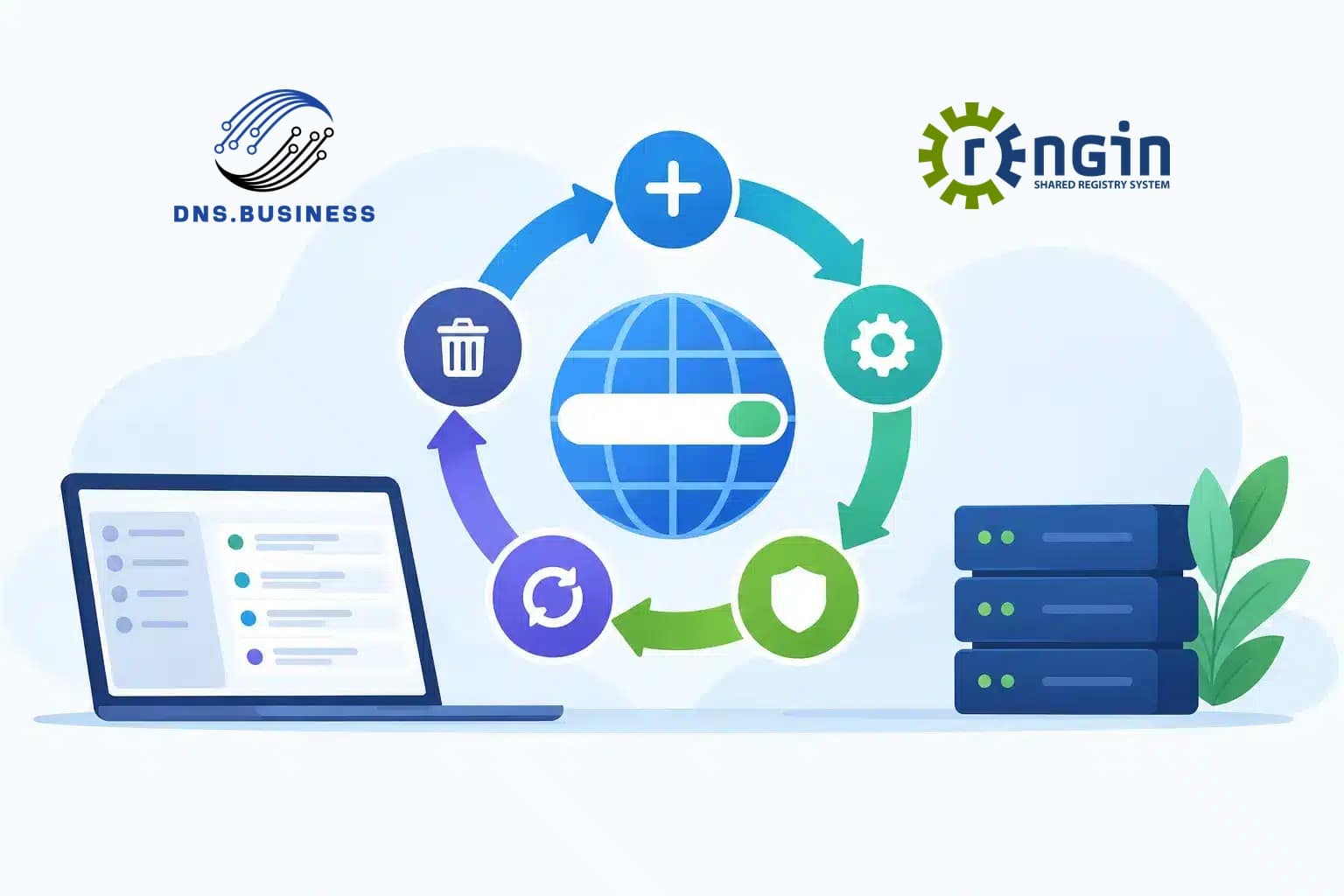
Provisioning and lifecycle automation sit at the center. Registration, renewal, transfer, restore, nameserver changes, contact updates, DNS management, and status handling should all move through reliable workflows. If routine actions still require staff intervention, reseller scale becomes operational debt.
Account hierarchy is equally important. A registrar needs to define parent-child relationships, permissions, credit controls, and service entitlements with precision. Some reseller models are simple and flat. Others involve master resellers, sub-resellers, or region-specific commercial structures. A platform that cannot model those relationships will force the business into process exceptions.
Billing and pricing controls also need to be more sophisticated than basic markups. Real-world reseller environments involve tiered pricing, promotional pricing, currency handling, tax treatment, credit limits, and product bundling. The platform should support those models natively, not through fragile customization.
Then there is API access. Serious resellers often want to embed domain services into their own products and customer journeys. A registrar reseller platform should expose stable, well-documented APIs so partners can automate search, registration, renewals, transfers, and management functions. A portal alone is not enough for a modern channel strategy.
Where many platforms fall short
The market includes many tools that appear reseller-ready because they offer branding options and basic domain workflows. That can be enough for low-volume use cases. It is not enough for registrars serving multiple partner types, operating across jurisdictions, or managing broad TLD portfolios.
The first common weakness is shallow registry integration. If the platform abstracts domain operations too loosely, it may struggle with TLD-specific rules, premium domain handling, policy-driven requirements, or registry-side exceptions. A generic commerce layer cannot substitute for domain-industry depth.
The second weakness is fragmented operations. Some platforms handle ordering well but depend on separate tools for billing, DNS, reporting, support, or compliance review. That creates delays and data inconsistency. In channel environments, fragmentation compounds quickly because every operational gap is multiplied across many resellers.
The third weakness is limited visibility. Registrars need reporting that goes beyond sales totals. They need insight into reseller performance, domain lifecycle events, failed transactions, aging balances, abuse patterns, and TLD mix. Without that visibility, channel growth becomes harder to forecast and harder to govern.
Security, compliance, and trust are not optional
Reseller channels expand market reach, but they also expand the operational surface area. That makes security and policy control central to platform design.
A registrar reseller platform should support role-based access, audit trails, secure credential handling, and clear segregation between reseller and registrar functions. It should also make it easier to enforce domain policies consistently across the channel. That includes registration data controls, abuse response workflows, transfer rules, and TLD-specific policy requirements.
Compliance is not just about avoiding penalties. It protects service continuity and brand trust. If a registrar cannot demonstrate control over reseller activity, the commercial upside of the channel can quickly be offset by support burden, fraud exposure, and regulatory pressure.
This is where industry-specific infrastructure providers have an advantage over general software vendors. Domain operations are shaped by ICANN requirements, registry interfaces, transfer policies, DNS dependencies, and lifecycle states that do not behave like standard ecommerce products. The platform has to reflect that reality at the architectural level.
Scale is not only about volume
When buyers ask whether a platform can scale, they often mean transaction volume or domain count. Those metrics matter, but they are only part of the picture.
A scalable registrar reseller platform should also handle business model complexity. Can it support new TLD launches without process disruption? Can it onboard large reseller groups without custom rebuilding? Can it support regional expansion, multi-currency sales, and differentiated service levels? Can it absorb migration from a legacy environment without breaking existing partner relationships?
These questions matter because registrar businesses change. A platform that fits the current model but resists future change becomes a growth constraint. Flexibility should be engineered into the product from the start, especially for operators that expect portfolio expansion or new channel structures.
At DNS.Business, this is the practical difference between generic tooling and domain-specific infrastructure. Registrars and registry-linked operators need technology that can grow with operational demands, policy obligations, and partner ecosystems, not just support a basic sales front end.
How to evaluate a registrar reseller platform
A useful evaluation starts with your operating model, not a feature checklist. If your growth plan depends on indirect sales, API-based partner integration, or support for multiple reseller tiers, the platform should be tested against those exact conditions.
Ask how domain lifecycle actions are processed, where manual intervention still exists, and how exceptions are handled. Review the billing engine with real scenarios, including tax, credits, renewals, grace periods, and currency variation. Test reporting depth, not just dashboard appearance. Examine how the platform handles permissions, abuse escalation, and policy-driven restrictions.
It is also worth asking what happens during change. Many environments perform well in steady state and poorly during migration, product expansion, or partner onboarding. A capable vendor should be able to explain data migration methods, rollout sequencing, integration support, and risk controls in operational terms.
The right answer is not always the most feature-heavy platform. Sometimes the better choice is the one with tighter domain integration, stronger automation, and clearer governance, even if the interface is less flashy. In this part of the market, operational reliability usually outperforms visual polish.
The platform should strengthen the registrar, not bypass it
Some reseller systems are built in ways that gradually weaken the registrar’s control over pricing, customer relationships, or service quality. That may accelerate short-term channel growth, but it can create long-term dependency and inconsistent customer experience.
A better model is one where the platform empowers resellers while preserving registrar authority over infrastructure, policy enforcement, and commercial guardrails. That balance allows channel expansion without surrendering operational standards. It also makes it easier to introduce new services, maintain service levels, and protect margin as the reseller base grows.
That is the real benchmark. A registrar reseller platform should not simply make domain resale possible. It should make it governable, scalable, and commercially sustainable.
When the platform is built on strong domain infrastructure, registrars can expand with confidence, support partners more effectively, and create a channel model that holds up under pressure, not just in a product demo.