A registry migration usually looks manageable on paper right up until the first dependency surfaces. Thin versus thick data models, EPP behavior, DNSSEC continuity, escrow formats, registrar integrations, billing logic, reporting obligations – each one can turn a routine platform change into an operational event with real policy, security, and revenue consequences. That is why understanding how to migrate domain registry infrastructure starts with one assumption: this is not a website move, and it should not be treated like one.
For registry operators, the real objective is not simply getting to a new platform. It is preserving service continuity, data integrity, compliance posture, and registrar confidence while creating room for future scale. The migration plan has to protect the namespace on day one and improve operations on day two.
How to migrate domain registry operations without avoidable risk
The most effective registry migrations begin with a detailed operating model, not a cutover date. Before any data export or environment build starts, the registry operator needs a precise view of what exists today. That includes the authoritative registry database, EPP objects and status values, DNS publication workflows, DNSSEC key management, WHOIS or RDAP services, escrow processes, reporting obligations, premium name logic, reserved names, registrar account structures, and any local policy rules embedded in the current system.
This is where many projects either gain control or lose it. Legacy environments often contain undocumented business rules that only appear when a transfer, restore, redemption event, or host update is attempted. If those behaviors are not mapped early, the target platform may be technically sound while still producing policy or operational mismatches after launch.
A serious migration assessment should identify three things. First, what data and workflows must be replicated exactly for continuity. Second, what can be standardized or modernized without breaking registrar expectations. Third, what hidden dependencies could affect cutover timing, such as custom registrar integrations, finance systems, or national policy obligations.
Start with the right migration scope
Not every registry migration is a like-for-like transfer. Some operators are moving from a legacy back-end to a modern registry platform with minimal policy change. Others are combining migration with service redesign, automation, RDAP rollout, DNSSEC improvements, or a move from manual to API-driven registrar operations.
The trade-off is straightforward. A like-for-like migration reduces change risk but may preserve inefficient workflows. A transformation-led migration creates more long-term value but increases project complexity. In practice, the strongest approach is usually phased modernization. Move the core registry safely first, then introduce non-critical enhancements once the namespace is stable on the new platform.
That discipline matters because cutover weekends are not the time to redesign business logic. They are the time to execute a controlled transition against a tested baseline.
Audit the data model before moving anything
If you want to know how to migrate domain registry data successfully, start by validating the source data at object level. Domain names, contacts, hosts, registrar accounts, name server relationships, status codes, auth information, billing flags, DNSSEC material, and lifecycle timestamps all need to be checked for completeness and consistency.
Data cleanup is rarely optional. Legacy systems often contain duplicate contact records, malformed host objects, inconsistent status mappings, orphaned domains, or exceptions created through years of manual intervention. Moving bad data into a new platform only relocates the problem.
The target data model also matters. A migration from a thin model to a thick model, or from customized object handling to standards-based behavior, requires explicit mapping decisions. Every transformed field should be documented, approved, and tested. This is especially important where policy, reporting, or registrar billing depends on object state.
Validate protocol and service behavior
A registry is more than a database. Registrars interact with it through service behavior, and they notice even small differences quickly. EPP command responses, extension support, rate limits, session handling, polling messages, grace periods, and object status enforcement should all be validated against both the specification and actual registrar usage patterns.
This is where registrar communication becomes operationally important. If the migration introduces endpoint changes, certificate updates, new authentication requirements, or modified command behavior, registrars need a clear test window and implementation guidance well before cutover. Silence creates support tickets. Ambiguity creates failed transactions.
The same principle applies to RDAP or WHOIS, DNS publication, and any reporting interfaces used by regulators or institutional stakeholders. A registry migration succeeds when downstream users experience continuity or controlled improvement, not surprise.
Build a parallel environment and test like production matters
Registry migrations should be tested in a production-like environment with realistic data volumes, registrar scenarios, and failure conditions. A lab setup is not enough. The target platform needs to prove it can process registry transactions, publish zone changes correctly, maintain escrow outputs, support DNSSEC operations, and recover cleanly from rollback or service interruption scenarios.
Parallel runs are especially valuable. When the source and target systems can be compared over a controlled period, operators can validate transaction outcomes, object counts, zone generation, and service responses before final cutover. This helps expose quiet discrepancies that basic import validation may miss.
Testing should cover normal operations, but it should also cover edge cases that often create post-migration incidents. These include pending transfer states, redemption workflows, restore operations, host dependencies across domains, registrar credit issues, premium renewals, reserved name enforcement, and DNSSEC key rollovers.
A mature provider will also test operational procedures, not just software behavior. That means access controls, monitoring, alerting, backup validation, log review, incident response paths, and support escalation. Registries do not fail only because code breaks. They fail because teams cannot see or respond to issues quickly enough.
Protect DNS and DNSSEC continuity
If registry data is the heart of the namespace, DNS publication is the visible service layer. During migration, zone generation pipelines, publication timing, name server consistency, and signing workflows must remain stable. Any disruption here becomes immediately public.
DNSSEC deserves particular care. Key material, DS record continuity, signing policies, and rollover timing need exact handling. A technically successful migration that introduces validation failures is still a service failure. The right approach depends on the current signing model, the target infrastructure, and whether keys are retained or rotated during transition. In many cases, separating platform migration from major cryptographic changes reduces operational risk.
Plan cutover as an operational event
The cutover plan should define freeze periods, final data extraction timing, validation checkpoints, rollback conditions, registrar notices, internal responsibilities, and authority for go or no-go decisions. This is not administrative overhead. It is the control framework that protects the namespace when time pressure increases.
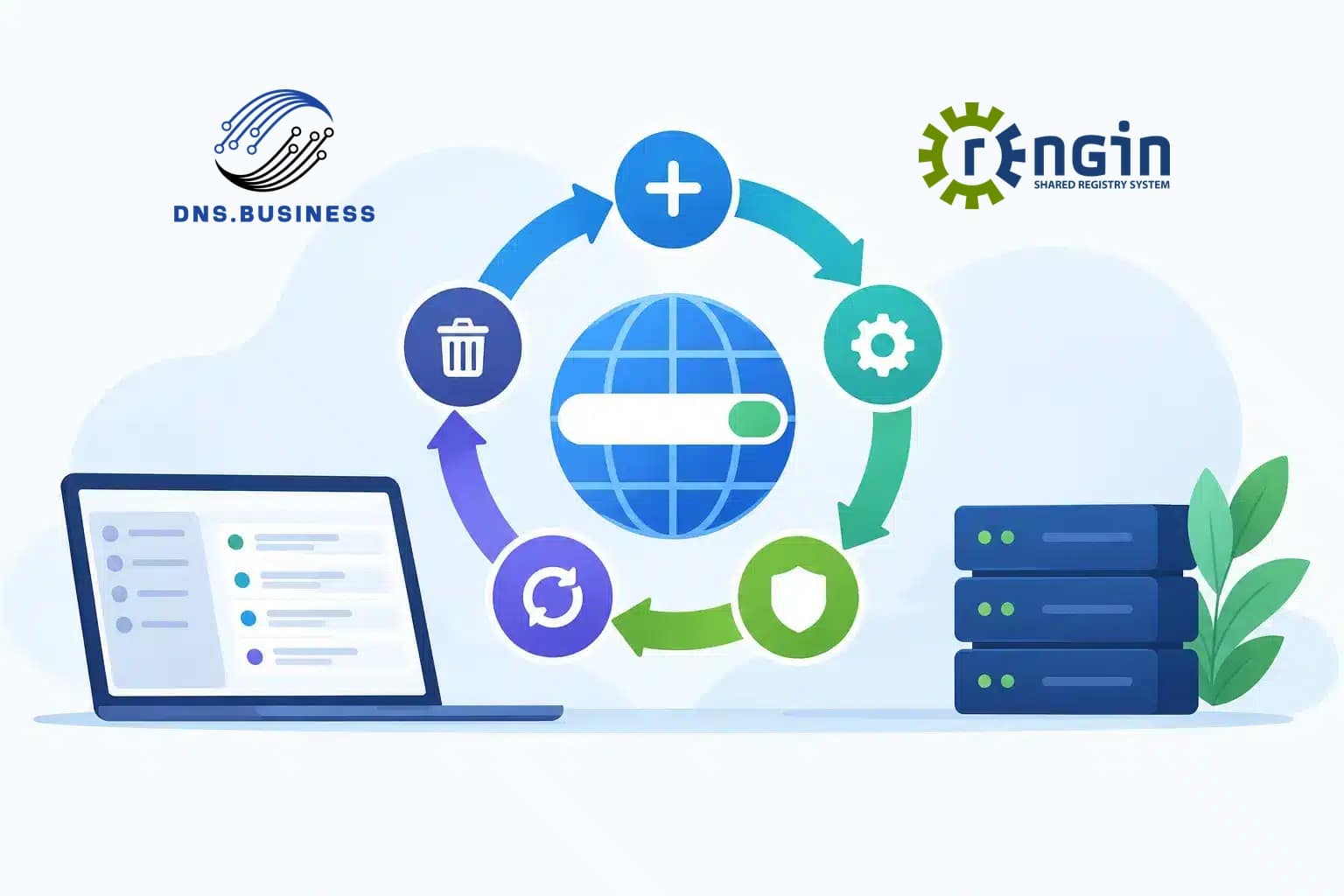
A practical cutover usually includes a controlled transaction freeze, final reconciliation between source and target, service endpoint activation, post-cutover validation, and elevated monitoring for a defined stabilization period. The exact model depends on transaction volumes, registrar footprint, and service architecture.
What matters is clarity. Every team should know what happens if validation fails at any stage. Hope is not a rollback strategy.
Keep compliance and governance in view
For many operators, migration risk is not only technical. It is contractual, regulatory, and reputational. Escrow continuity, audit evidence, data handling controls, retention policies, ICANN-related obligations where relevant, and local governance requirements all need to remain intact throughout the project.
This is one reason registry-specific platforms and migration partners matter. Generic migration experience does not automatically translate into domain-industry readiness. Registry operations sit at the intersection of protocol standards, policy enforcement, security controls, and commercial dependencies. Missing any one of those can delay launch or weaken trust.
Providers with direct back-end registry experience are better positioned to anticipate what registrars will test first, what policy teams will question, and where operational gaps tend to surface. For operators planning a move, that experience often determines whether the migration becomes a controlled transition or an extended remediation program.
After migration, measure what improved
A completed cutover is not the end of the work. The first weeks after migration should confirm service stability, registrar transaction success, DNS publication accuracy, support ticket trends, financial reconciliation, and reporting quality. This is also the time to review whether the new platform is delivering the operational gains that justified the move in the first place.
That might mean stronger automation, better reporting, faster onboarding for registrars, improved DNSSEC management, or cleaner lifecycle handling. If those benefits are not visible after stabilization, the migration may be technically complete without being strategically successful.
For registry operators evaluating how to migrate domain registry systems, the clearest lesson is simple: treat migration as a business-critical infrastructure program, not a software replacement. The namespace has to remain trusted while the underlying platform changes. When the planning is grounded in registry reality, the migration does more than preserve continuity – it creates a stronger operating base for growth, compliance, and long-term resilience.
The right migration should leave your registrars calm, your data cleaner, and your operations team with more control than they had before.