A registry backend becomes visible only when it fails: an EPP command times out during a launch, a billing reconciliation produces conflicting records, or a migration leaves registrars unable to manage names. Knowing how to choose registry backend technology means evaluating far more than a feature list. It means selecting the operational foundation that will carry your namespace through policy changes, growth cycles, security events, and registrar demands.
For ccTLD and gTLD operators, the decision has long-term consequences. Replacing a backend is possible, but it is not a casual software upgrade. It affects registrars, registrants, escrow processes, DNS provisioning, financial controls, reporting obligations, and the reputation of the registry itself. The right platform should support current requirements without limiting the next five years of operational plans.
Start with the operating model, not the software demo
A backend that is appropriate for a tightly governed ccTLD may not fit a commercially aggressive new gTLD. Before reviewing providers, define how the registry will operate. This includes the namespace’s projected domain volume, target registrar model, launch approach, pricing structure, policy rules, and expected service-level commitments.
A small registry with a limited registrar community may prioritize managed operations and straightforward automation. A registry expecting high-volume registrar activity, premium domains, multiple launch phases, or international expansion needs greater configurability and performance headroom. The critical question is not whether a provider can support the registry at launch. It is whether the platform can support the registry when its operating model becomes more complex.
Clarify which functions must be controlled internally and which can be delivered as managed services. Some operators want direct access to configuration, reports, and policy workflows while relying on the provider for infrastructure and 24/7 technical operations. Others require a more hands-on operating model. A clear division of responsibility prevents gaps during incidents and avoids costly assumptions after deployment.
Assess core registry capabilities in real scenarios
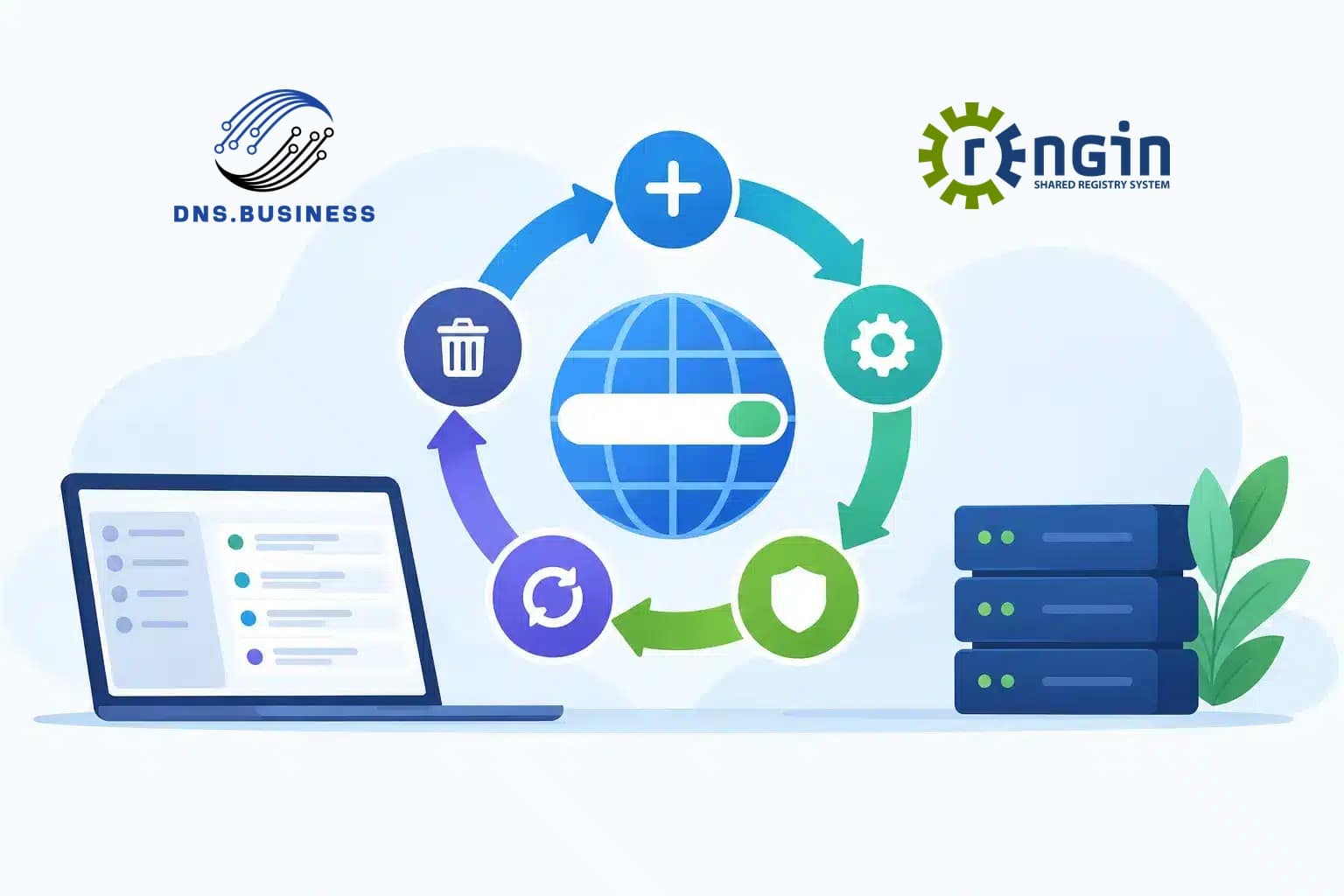
A registry backend should be built for domain lifecycle management, not adapted from generic customer or asset-management software. Its core functions need to manage creates, renewals, transfers, deletes, restores, contacts, hosts, nameservers, status codes, and domain lifecycle policies accurately at scale.
Ask providers to demonstrate the workflows that matter to your registry. Do not accept a generic overview of a dashboard. Test the conditions that create operational risk: a contested transfer, a bulk renewal event, a redemption restoration, a reserved-name release, a pricing exception, or a registrar suspension. Confirm how the platform applies policy rules, records audit events, and communicates outcomes through EPP and administrative interfaces.
EPP compatibility and registrar experience
For registrar-facing operations, EPP is not simply a protocol requirement. Its implementation shapes the daily experience of your channel. The backend should support standards-based EPP, predictable command responses, appropriate extension handling, secure authentication, and clear operational documentation.
Evaluate rate limiting, session controls, command logging, error messaging, and sandbox availability. A technically compliant EPP service can still create unnecessary support volume if its responses are inconsistent or its test environment does not reflect production behavior. Registrars need an integration path they can trust before they commit resources to a new TLD or migrated namespace.
Policy and pricing flexibility
Registry policy evolves. Governments introduce new requirements, boards revise eligibility rules, and commercial teams adjust promotions or premium pricing. The backend must let authorized operators implement those changes without unnecessary custom development or risky manual workarounds.
Look closely at support for reserved names, blocked names, eligibility conditions, registrar permissions, grace periods, premium tiers, promotional pricing, and launch-phase rules. Flexibility should be governed, not uncontrolled. Every material configuration change should have role-based access, an approval process where required, and a durable audit trail.
Make security, continuity, and compliance measurable
Security claims should be assessed through controls, evidence, and operating discipline. A registry backend holds valuable domain, registrant, and registrar data while controlling a critical element of internet infrastructure. The provider should be able to explain how it protects data in transit and at rest, manages privileged access, monitors systems, handles vulnerabilities, and responds to security incidents.
Ask for specifics on data center design, redundancy, backup frequency, recovery testing, disaster recovery objectives, and incident communications. A backup is only useful when restoration procedures are tested under realistic conditions. Similarly, high availability should be supported by architecture and documented service targets, not only a marketing statement.
Compliance requirements vary by registry type and jurisdiction. gTLD operators must consider ICANN obligations, including registry data escrow and reporting requirements. ccTLD operators may face national policy, sovereignty, privacy, procurement, and local data-handling obligations. Enterprise namespaces may require strict internal identity, audit, and access controls.
The backend partner should understand the distinction between technical availability and compliance readiness. Confirm whether reporting is automated, whether data can be exported in usable formats, and whether the provider can support audits without placing excessive burden on the registry team. ISO-certified operational practices and direct registry experience provide meaningful reassurance when the platform is supporting regulated or highly visible namespaces.
Evaluate scale by testing the uncomfortable moments
A registry may process modest volumes most days and still require substantial capacity at specific moments. Sunrise openings, land rush periods, expiring-domain campaigns, high-profile releases, and registrar batch operations can create bursts that expose weak architecture.
Capacity planning should cover domain count, concurrent EPP sessions, transaction throughput, API demand, report generation, DNS provisioning, and database growth. Ask how the provider measures capacity and what triggers expansion. It is also reasonable to request evidence of performance under comparable workloads.
Scalability is not only about transaction speed. It includes operational scalability: whether a small registry team can manage more registrars, more policies, and more domains without proportionally increasing manual work. Automation around billing, notifications, reporting, lifecycle events, and registrar management helps protect margins while improving service consistency.
Treat migration as a product capability
If you are replacing a legacy platform, migration capability should carry as much weight as the destination platform. Registry migrations involve more than copying domain objects. They require data validation, status mapping, historical records, credentials, registrar communications, escrow alignment, DNS continuity, testing, cutover planning, and post-migration support.
A capable provider will begin with discovery rather than promise a fixed timeline immediately. They should identify data quality issues, unsupported legacy fields, custom policies, registrar dependencies, and integration points before defining the migration plan. The plan should include rehearsals, acceptance criteria, rollback decisions, communication milestones, and a clear hyper-care period after cutover.
Ask who owns each task. Registry operators often underestimate the internal effort required to validate data and communicate changes to registrars. The best partner provides structured support, but the operator must still make timely policy and data decisions.
Compare partners on accountability, not features alone
Most serious backend providers can present domain management, EPP, reporting, and security features. The stronger differentiator is how the provider behaves as an infrastructure partner when conditions change.
Use a weighted evaluation that considers four areas: domain-industry experience, technical and security capability, migration and implementation discipline, and long-term service accountability. The weighting will differ by registry, but each category should be assessed with evidence rather than assertions.
Review service-level agreements carefully. Define availability measurement, maintenance windows, support response targets, escalation paths, exclusions, service credits, and responsibilities during major incidents. Also examine data ownership, portability, exit support, and the ability to retrieve operational data if the commercial relationship ends. A backend should reduce vendor risk, not create dependency that is difficult to manage.
It is equally valuable to speak with references whose operating conditions resemble yours. Ask how the provider handled incidents, policy changes, registrar onboarding, and unexpected volume. A launch success story is useful, but long-term operational behavior is the better indicator.
Choose for the registry you intend to become
The best backend decision balances proven controls with room to grow. Avoid selecting an oversized platform with complexity your team cannot use, but do not choose a low-cost system that makes future policy, security, or scaling requirements expensive to achieve.
DNS Business approaches registry infrastructure as a long-term operating partnership, combining domain-specific technology, managed services, and migration experience for operators that need dependable control at every stage of growth. The right selection process gives decision-makers confidence before launch and preserves that confidence when the namespace reaches its next critical moment.