A registry can tolerate many kinds of complexity. What it cannot tolerate is uncertainty at the core. When domain volumes rise, compliance obligations tighten, or a migration deadline gets real, domain registry management software stops being a background system and becomes the operating foundation for the entire namespace.
For registry operators, new gTLD applicants, and organizations running regulated or branded namespaces, the buying question is rarely just which platform has the most features. The real question is whether the software can support stable operations under pressure, adapt to policy and business change, and scale without forcing disruptive redesign later. That is where specialized registry infrastructure separates itself from generic domain tooling.
What domain registry management software actually needs to do
At a technical level, domain registry management software is responsible for far more than recording names in a database. It sits at the center of provisioning, lifecycle management, registrar connectivity, billing logic, reporting, policy enforcement, DNS integration, and operational security. If any one of those layers is weak, the registry carries the risk.
That is why mature platforms are built around the realities of TLD operations rather than around a narrow administrative interface. A registry needs predictable EPP behavior, accurate domain state transitions, auditable workflows, and the ability to apply local policy requirements without creating exceptions that become permanent technical debt.
For ccTLD operators, this often means aligning software behavior with national policy, local presence rules, reserved name controls, and institutional oversight. For gTLD environments, it can mean managing ICANN-aligned requirements, sunrise or claims processes, registrar onboarding, and expansion planning. The software has to support those demands without turning every policy change into a development project.
Why generic platforms often fall short
Many software products can manage domains. Far fewer can operate a registry. That difference matters.
Generic platforms are often designed for retail domain sales, portfolio administration, or registrar-side workflows. Those functions are useful, but they do not address the operational depth required by a registry back end. A registry environment needs precise control over provisioning logic, protocol behavior, abuse handling, reporting, security controls, and multi-stakeholder administration.
This is where decision-makers sometimes underestimate the cost of compromise. A lower-cost platform may appear attractive during procurement, yet the hidden expense shows up later in custom work, limited automation, operational workarounds, and migration complexity. Software that does not fit the domain industry properly tends to shift the burden onto the operator.
That does not mean every registry needs the same architecture or service model. A smaller ccTLD may prioritize managed operations and policy flexibility over deep in-house customization. A high-growth gTLD group may care more about performance engineering, multi-registry administration, and reseller integration. The point is not that one model fits all. The point is that the platform must fit registry operations specifically.
The capabilities that matter most
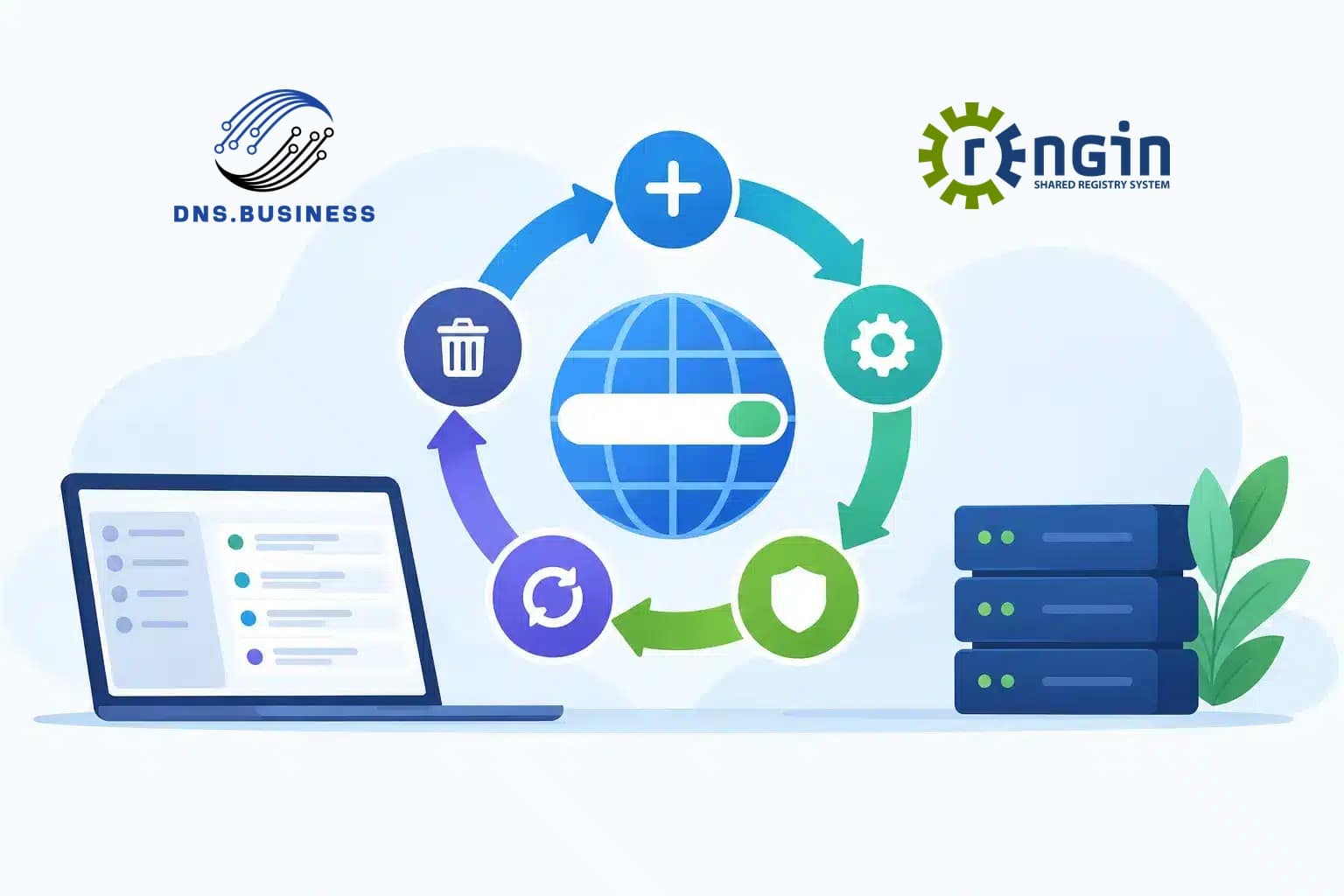
The strongest domain registry management software supports stable daily execution while giving operators room to grow. In practice, that starts with dependable core registry functions: domain create, renew, update, transfer, restore, delete, host management, contact handling where applicable, and standards-aligned registrar communication.
Just as important is the surrounding control layer. Operators need configurable policy enforcement, role-based access, detailed logging, reporting, and workflow transparency. Security cannot sit on the edge of the platform. It has to be built into how the system authenticates users, protects registrar access, records actions, and supports operational continuity.
Scalability is another area where surface-level claims are not enough. A platform may perform well in a test environment and still struggle under registrar transaction bursts, zone generation demands, or periods of unusually high registration activity. Buyers should ask how the software performs at different operational scales, what architectural choices support growth, and what monitoring exists to detect stress before it becomes downtime.
Interoperability also deserves close attention. Registry systems rarely operate alone. They connect to DNS services, WHOIS or RDAP services, escrow processes, billing systems, abuse workflows, analytics environments, and migration utilities. The best software reduces integration friction rather than increasing it.
Compliance and credibility are part of the platform
In the domain industry, software decisions are operational decisions, but they are also credibility decisions. Registry operators answer to regulators, boards, governments, registrars, enterprise stakeholders, and in some cases ICANN-aligned requirements. The system they choose has to support that accountability.
This is why compliance features should not be treated as a secondary checklist. Audit trails, access governance, data handling controls, business continuity planning, and standards-based operational processes all affect how confidently a registry can run. Certifications, accreditation, and demonstrated operating experience also matter because they indicate whether the provider understands the discipline required in a production registry environment.
There is a practical side to this. During procurement, many buyers focus on product demonstrations and feature maps. Those are useful, but they do not replace evidence of live operational delivery. Software may look capable in a controlled demo and still prove difficult in active use if the provider lacks registry-grade implementation and support discipline.
Migration is where software quality becomes visible
If a registry is replacing a legacy platform, migration planning deserves the same level of scrutiny as the new system itself. Poor migration handling can disrupt registrar relationships, damage trust, and create long recovery cycles even when the destination platform is technically strong.
Good domain registry management software should come with a clear migration path. That includes data mapping, validation processes, registrar communication support, dual-run or cutover planning where needed, rollback readiness, and post-migration monitoring. The provider should be able to explain not only how the new platform works, but how operations remain stable while moving to it.
This is one of the clearest areas where industry-specific experience matters. Registry data models, policy rules, reserved names, host objects, lifecycle states, and registrar dependencies are not trivial to migrate. Teams that have handled live registry transitions before tend to identify risks earlier and structure the move more carefully.
SaaS, licensed, or managed service – the right model depends on the operator
Deployment model is not just a commercial preference. It shapes governance, staffing, risk ownership, and long-term flexibility.
A SaaS approach can reduce time to deployment and simplify maintenance, particularly for operators that want modern capability without building a large internal technical operations function. A licensed deployment may suit organizations that require tighter infrastructure control, specific hosting models, or internal integration ownership. Managed services can be especially effective for registries that need experienced operational support alongside the software itself.
There are trade-offs in each case. More control can mean more responsibility for updates, monitoring, and continuity. More outsourcing can improve speed and resilience but may require careful service-level design and governance. The right answer depends on regulatory expectations, internal capability, budget structure, and growth plans.
What to ask before selecting a provider
Registry buyers should expect clear answers to a few critical questions. How many domains and registrars does the platform support in live environments? How are security, auditability, and continuity handled? What policy elements are configurable without custom development? How are migrations executed and supported? What operational expertise sits behind the software?
It is also worth asking what happens after launch. Registry systems are not one-time purchases. Policies evolve, product models change, and usage patterns shift. A capable provider should offer a partnership model that supports optimization over time, not just initial delivery.
That is where specialized providers add measurable value. A company such as DNS.Business, with domain-industry infrastructure focus and live registry operating experience, brings more than software alone. It brings implementation discipline, registry context, and the ability to support growth without disconnecting technology from operational reality.
The strongest registry platforms do not try to be everything to everyone. They are built for the specific demands of namespace administration, registrar ecosystems, compliance, and scale. If your registry software implementation cannot support those demands cleanly today, it will not become easier once the namespace grows. The better choice is the one that gives your registry operation room to run with confidence.