A namespace does not fail at launch because a landing page was late. It fails when policy, provisioning, billing, DNS, registrar workflows, and support procedures behave differently under live demand than they did in a test environment. The best namespace launch checklist gives registry teams a disciplined way to close those gaps before the first domain is created.
For a new gTLD, ccTLD expansion, branded TLD, or regulated namespace, launch readiness is an operational program rather than a single milestone. Each decision affects the next: registration policy defines validation requirements, validation shapes EPP behavior, EPP behavior affects registrar integration, and all of it must be visible through reporting, monitoring, and support. A credible launch plan protects stability on day one while creating a foundation for growth over the years that follow.
Start With the Operating Model, Not the Launch Date
Before configuring registry software or opening a registrar onboarding portal, define the namespace’s purpose and operating boundaries. Is the objective broad public registration, a restricted community, a geographic identity, a brand-controlled space, or a government-regulated domain? The answer determines the rules that the registry platform, registrar channel, and support team must enforce.
Establish clear ownership across registry operations, technical infrastructure, policy, compliance, finance, communications, and customer support. Launches often slow down when a registrar asks a policy question that has no approved owner, or when an abuse escalation reaches a team without authority to act. A responsibility matrix should identify who approves policy exceptions, who authorizes emergency changes, and who communicates with registrars during an incident.
Define the success measures early. Registration volume matters, but it is not enough. Track registrar certification completion, EPP command success rates, DNS publication latency, failed payment activity, validation rejection rates, support response times, and abuse case resolution. These measures reveal whether the namespace is operating reliably, not merely whether domains are being sold.
Best Namespace Launch Checklist: Core Readiness Areas
A launch checklist works when it is evidence-based. Every item should have an accountable owner, a completion date, and documented proof that it has been tested. The following areas should be treated as release gates rather than informal reminders.
1. Governance, policy, and compliance
Finalize registration policies, eligibility rules, reserved-name requirements, dispute procedures, privacy handling, abuse policies, and data-retention obligations. Ensure that the published policy language matches the rules configured in the registry system. A restriction that cannot be technically validated at create, update, transfer, or renewal is not an enforceable operating control.
For ICANN-regulated namespaces, confirm that required agreements, consensus-policy obligations, escrow arrangements, and reporting obligations are mapped to operational procedures. For ccTLDs and regulated spaces, local legal requirements may carry equal or greater weight. Policy should be reviewed not only by legal stakeholders but also by registry administrators who must apply it under pressure.
2. Registry platform configuration
Configure the authoritative registry database, EPP services, WHOIS or RDAP services as applicable, lifecycle states, grace periods, redemption handling, transfer rules, and restore processes. Confirm that fee schedules, premium names, reserved names, blocked names, and promotional rules are consistently represented across the registry, registrar interfaces, billing records, and reporting tools.
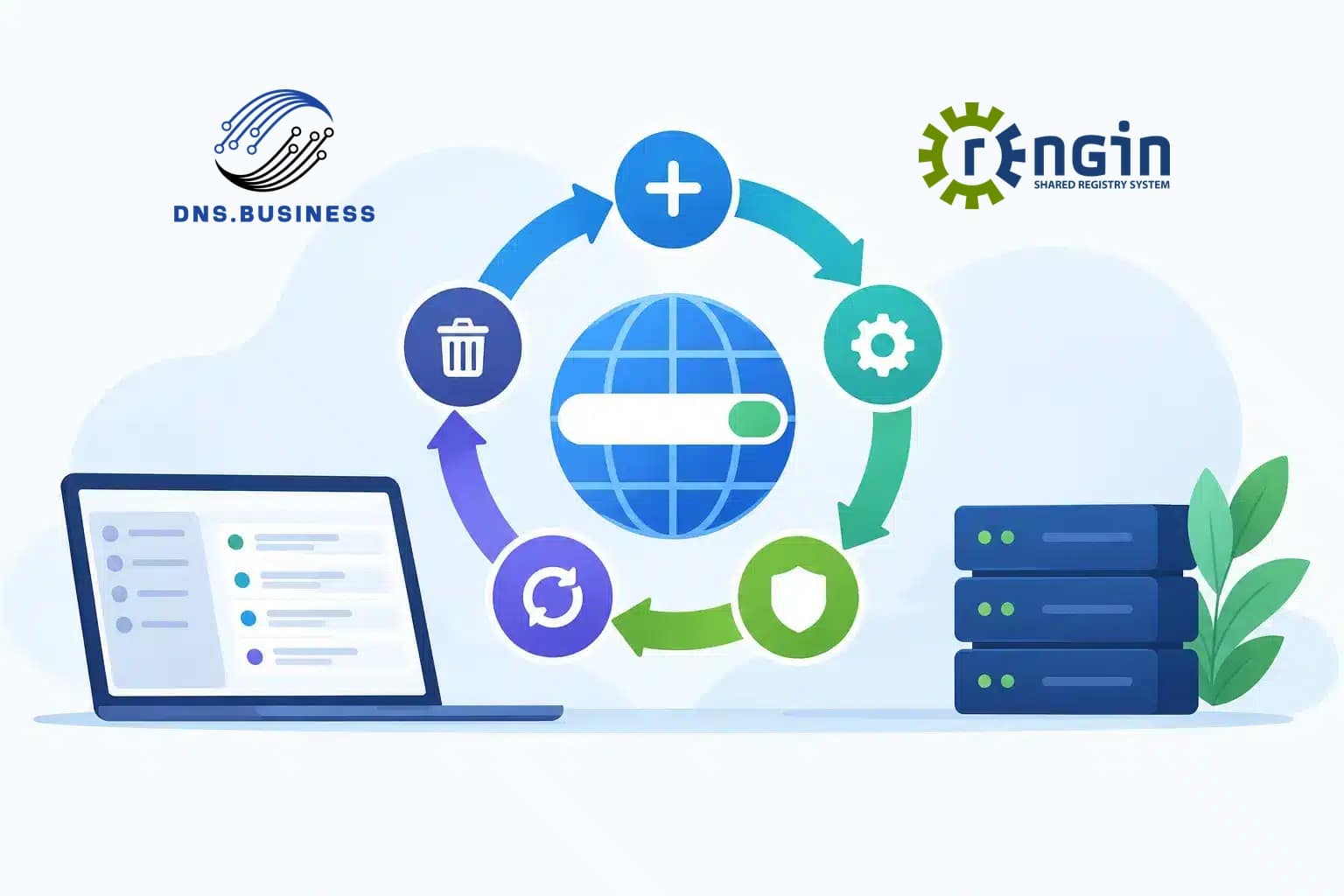
Lifecycle settings deserve special attention. A one-day discrepancy in an auto-renew grace period or redemption period can create financial disputes and damage registrar confidence. Test complete domain journeys, from availability check through registration, renewal, expiration, deletion, restoration, transfer, and eventual release. Do not rely only on isolated command tests.
3. DNS and technical resilience
The registry must demonstrate that delegation, zone generation, DNSSEC signing where offered, and publication processes perform predictably during high activity. Validate nameserver checks, host object behavior, glue handling, zone update timing, and rollback procedures. If your namespace supports internationalized domain names, test normalization, variant handling, and display behavior across every affected service.
Resilience planning should include capacity modeling and failure scenarios. Measure how the system behaves during registrar reconnect storms, batch create activity, database failover, delayed external validation responses, and DNS publication exceptions. High availability architecture is valuable, but only if the operations team has rehearsed how to use it.
4. Registrar onboarding and certification
Registrars are the namespace’s primary operational channel. Provide a defined certification process with production-like test credentials, accurate EPP documentation, test cases, error-code guidance, contact paths, and timelines for approval. A registrar should be able to determine whether an integration issue is caused by its client, a policy rule, validation logic, or a platform response.
Test more than basic create and check commands. Registrar certification should cover polling, billing behavior, fee extensions, transfer flows, DNS host management, status updates, reporting access, and failure handling. If launch phases such as Sunrise, Landrush, Limited Registration Period, or General Availability apply, validate the commands and eligibility data specific to each phase.
A broad registrar network can fuel adoption, but quality matters more than an inflated onboarding count. A smaller group of fully certified registrars is safer than a larger group that has not completed end-to-end testing.
5. Security, access, and data protection
Apply least-privilege access controls to registry administration, finance functions, reporting, support consoles, APIs, and infrastructure management. Enforce multi-factor authentication for privileged accounts, maintain audit trails, and establish periodic access reviews. Shared administrator credentials and undocumented emergency access are common sources of avoidable risk.
Security readiness also includes vulnerability management, backup verification, encryption standards, logging retention, incident response, and third-party dependency controls. Run a tabletop exercise involving a realistic scenario, such as compromised registrar credentials, an abuse surge, a failed zone publication, or a suspected data exposure. The goal is not simply to confirm that a plan exists, but to confirm that teams can make decisions and communicate quickly.
6. Billing, reporting, and reconciliation
A namespace can process registrations correctly and still create operational problems if billing records cannot be reconciled. Validate account funding, credit limits, invoices, taxation where applicable, refunds, charge adjustments, and financial reporting. Confirm that registrar transaction reports align with registry records and that exceptions are visible before they become disputes.
Operational reporting should give stakeholders an accurate view of domains under management, transaction volumes, domain status distribution, expiring inventory, failed commands, registrar activity, and service availability. Executives need concise performance indicators, while registry operators need the detailed records required to investigate individual transactions.
7. Support, abuse handling, and communications
Prepare support teams with escalation paths, standard response guidance, registry status definitions, and access to the information needed to resolve registrar issues. The launch period typically produces questions that are technically simple but commercially urgent: a registrar cannot fund an account, a validation request is rejected, a name is unexpectedly reserved, or a domain is not resolving as expected.
Abuse operations require the same clarity. Define intake channels, evidence requirements, triage priorities, escalation timing, suspension authority, and communications procedures. Restricted namespaces may require faster review and more detailed audit records than open commercial TLDs. The appropriate model depends on the namespace’s risk profile and policy commitments.
Communications should include registrar notices, maintenance windows, incident templates, policy-change notices, and an approved launch-day update rhythm. Consistent communication prevents speculation when transaction volumes rise or a controlled service change is necessary.
Rehearse Launch as a Controlled Production Event
The final readiness step is a production rehearsal that follows the actual launch sequence. Execute planned phase changes, enable registrar access, process representative transactions, generate zones, reconcile billing, review reports, and test support escalation. Include business stakeholders, not just engineers, because many launch failures occur at handoffs between teams.
Use a go/no-go meeting with explicit decision criteria. Open defects should be categorized by their effect on security, compliance, transaction integrity, DNS availability, registrar experience, and customer support. Not every issue requires a launch delay, but no critical issue should be hidden behind a calendar commitment. A phased release may be the better choice when demand is uncertain or a restricted policy model needs additional operational observation.
Build for the First Year, Not Only the First Hour
A successful launch is followed by renewals, transfers, policy updates, registrar expansion, security reviews, audits, and growth initiatives. The registry platform and operating model must accommodate those realities without requiring disruptive rework. This is where specialized domain infrastructure delivers value: flexible policy controls, dependable registry services, automation, and experienced operational support allow teams to evolve the namespace while protecting continuity.
DNS.Business supports registry operators with domain-industry technology and operational expertise designed for this long horizon. Whether the requirement is a new registry deployment, a migration from legacy systems, or modernization of registrar operations, the objective remains the same: dependable control over every stage of the domain lifecycle.
Treat the checklist as a living operational record after launch. Review it after the first registration surge, the first significant incident, and the first renewal cycle. The lessons captured there will do more to protect the namespace than a perfect-looking launch-day dashboard ever could.